If you rely on commercial or industrial scales to weigh product, control inventory, or meet regulatory standards, you've likely seen the phrase "ISO/IEC 17025 accredited calibration" — but what does it actually mean in practice? And why should it factor into where you send your equipment for service? Here's a plain-language breakdown from the team at National Scale of New England, Inc., based in Springfield, MA, serving businesses across New England for over 100 years.
What ISO/IEC 17025 Accreditation Actually Means
ISO/IEC 17025 is the international standard that defines the technical and quality management requirements a calibration laboratory must meet to demonstrate it produces accurate, reliable, and repeatable measurement results. It is developed jointly by the International Organization for Standardization (ISO) and the International Electrotechnical Commission (IEC).
Accreditation to this standard is not self-declared. It requires an independent, third-party assessment body to audit the laboratory's processes, personnel competency, equipment, and quality management system — and to repeat those audits on a regular basis. In the United States, that assessment is typically carried out through bodies recognized under the International Laboratory Accreditation Cooperation (ILAC) framework.
What this means for your business: when a calibration certificate comes from an ISO/IEC 17025 accredited provider, the results behind it have been validated by someone other than the provider itself.
NIST Traceability — Why It's Not Just a Buzzword
One of the core requirements of ISO/IEC 17025 accreditation is measurement traceability. Every calibration result produced by an accredited laboratory must be traceable back to the International System of Units (SI) through a National Metrology Institute — in the US, that's the National Institute of Standards and Technology (NIST).
This chain of traceability matters for your operation in concrete ways:
- Audits move faster. When your calibration certificates carry traceable, accredited results, inspectors and auditors recognize the rigor behind them immediately — fewer questions, less back-and-forth.
- Regulatory compliance is easier to document. Industries including food processing, pharmaceuticals, cannabis, chemical production, and manufacturing often require documented proof that measurement equipment is calibrated to a recognized standard.
- Product quality holds tighter tolerances. Inaccurate scales don't just create compliance headaches — they create waste, rejected product, and potential liability.
What the Accreditation Process Actually Requires
Earning and maintaining ISO/IEC 17025 accreditation isn't a one-time event. Accredited calibration providers must demonstrate:
- A documented quality management system governing how calibrations are performed and recorded
- Qualified, trained technicians whose competency is assessed and on record
- Calibrated reference standards that are themselves traceable to national standards
- Defined, validated calibration procedures for each equipment type within scope
- Regular internal audits and independent third-party reassessment
This structure is what separates accredited calibration from a general "we calibrate scales" service offering. The documentation, the traceability, and the external accountability are baked into the process — not added after the fact.
How ISO/IEC 17025 Accreditation Matters for Springfield, MA Businesses
For commercial and industrial operations across the Springfield, MA region — manufacturing facilities, distribution centers, food processors, cannabis operators, laboratories, and industrial production environments — the calibration certificate you receive is only as useful as the standard behind it.
A certificate from a non-accredited provider may satisfy an internal record-keeping requirement. But in a regulatory audit, a customer quality inspection, or a legal dispute involving measurement accuracy, an ISO/IEC 17025 accredited certificate carries a weight that a generic calibration document does not.
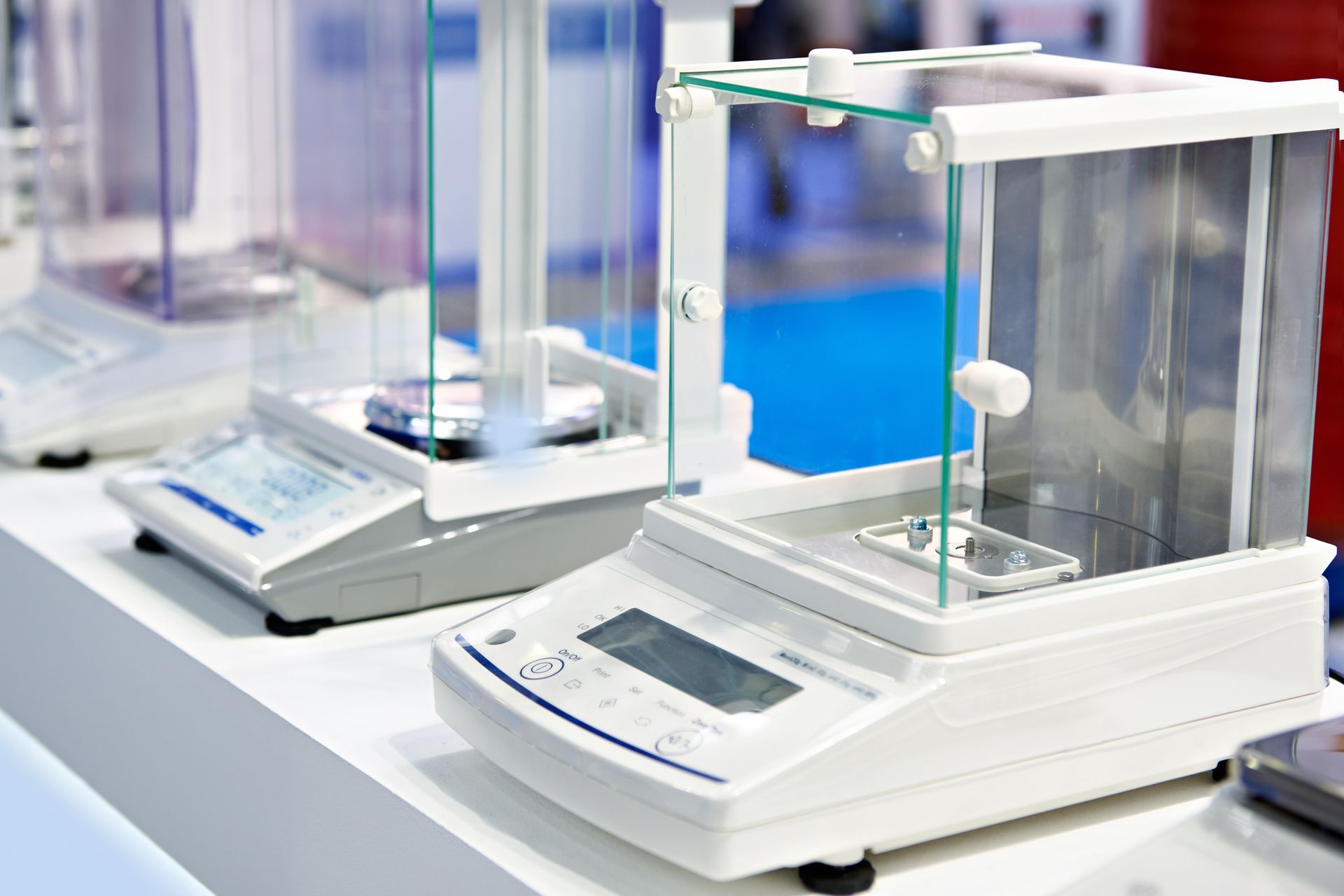
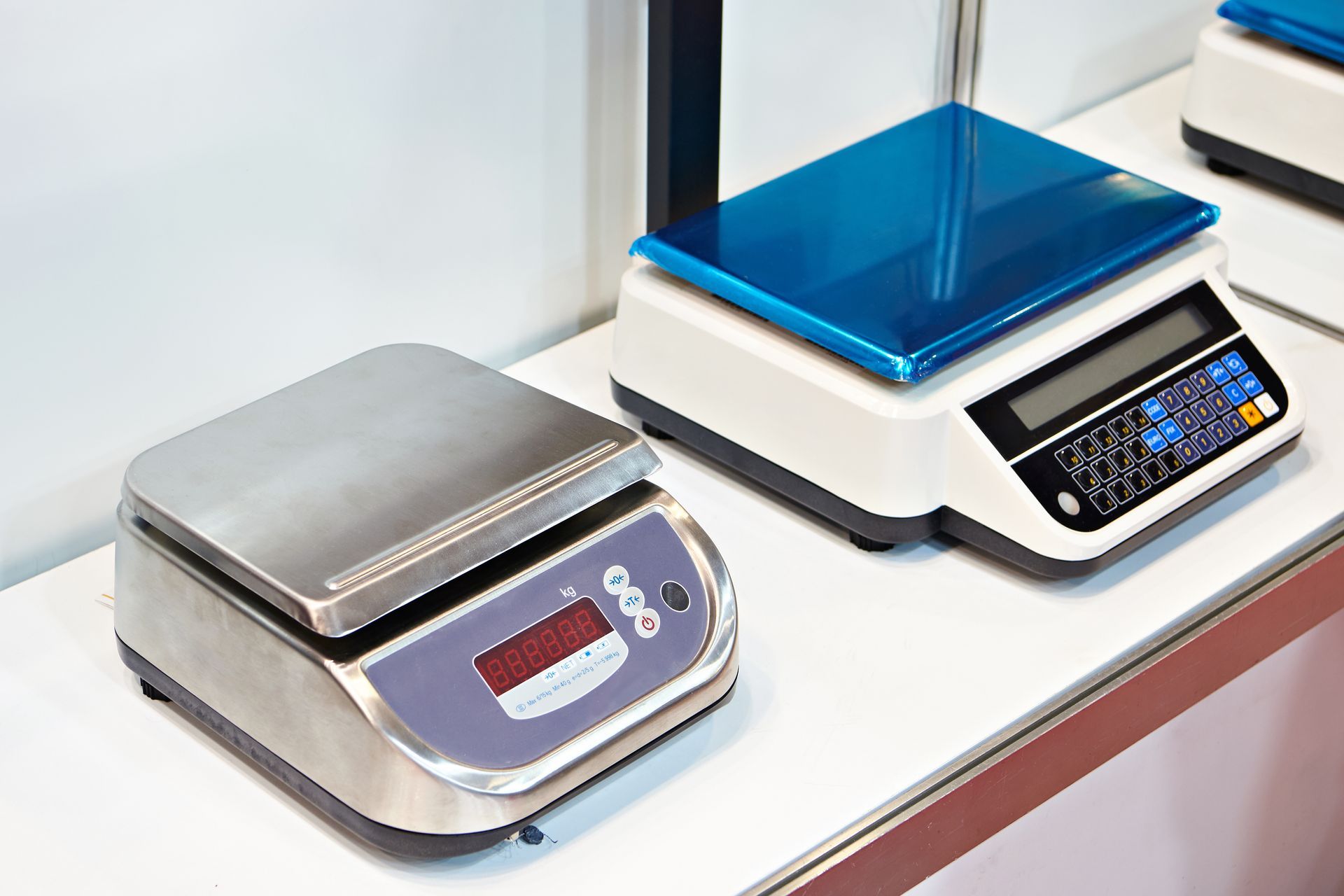
National Scale of New England, Inc. holds ISO/IEC 17025 accreditation and has provided commercial and industrial scale calibration across New England for more than a century. We service bench scales, floor scales, counting scales, crane and hanging scales, lab balances, portable scales, and associated indicators — for the full range of commercial and industrial applications. We do not service retail scales.
Our on-site calibration approach minimizes downtime: your equipment is only out of service while our technician is on-site. When equipment requires bench work, we offer free loaner equipment (when available) to keep your operation moving.
Accredited Calibration vs. Non-Accredited: The Real Difference
It's worth being direct about what you're comparing when you choose an accredited versus a non-accredited calibration provider:
Non-accredited calibration may be performed by qualified technicians using appropriate equipment — but there is no independent verification of that fact. The process, the traceability chain, and the technician's qualifications are taken on faith.
ISO/IEC 17025 accredited calibration means an independent body has verified the laboratory's technical competence, reviewed the quality management system, and confirmed that results meet the documented standard — and that this review is repeated on a scheduled basis.
For any commercial or industrial operation where measurement accuracy has a downstream effect on product quality, regulatory compliance, or financial accuracy, the distinction is material.
Common Questions About ISO/IEC 17025 Accredited Scale Calibration
What industries typically require ISO/IEC 17025 accredited calibration?
Manufacturing, food and beverage processing, pharmaceutical production, chemical processing, cannabis operations, aerospace supply chain, and any operation subject to FDA, USDA, or OSHA measurement standards frequently require — or strongly benefit from — accredited calibration documentation.
Does ISO/IEC 17025 accreditation apply to on-site calibration, or only lab-based work?
Accreditation scope can cover both on-site (field) calibration and in-lab calibration, provided the accredited provider's scope statement includes field work. National Scale of New England performs on-site calibration across New England.
What should I look for on a calibration certificate from an accredited provider?
An accredited calibration certificate should identify the accrediting body, the laboratory's accreditation number, the measurement uncertainty, the traceability chain, the equipment calibrated, and the calibration results. If a certificate lacks measurement uncertainty data, it does not meet ISO/IEC 17025 requirements regardless of what it claims.
Is there a difference between "ISO 9001 certified" and "ISO/IEC 17025 accredited"?
Yes — these are different standards. ISO 9001 is a quality management system standard. ISO/IEC 17025 is specifically a technical competence standard for testing and calibration laboratories. ISO/IEC 17025 is the relevant accreditation for calibration work.
Get ISO/IEC 17025 Accredited Scale Calibration in Springfield, MA
National Scale of New England, Inc. has been the trusted commercial and industrial scale service provider across New England for over 100 years. Our ISO/IEC 17025 accreditation means every calibration certificate we issue is backed by independent verification, documented traceability to NIST, and a quality management system built to hold up under audit. We serve commercial and industrial operations throughout the Springfield, MA region — from lab balances to heavy-duty floor scales.
Call us at (413) 733-2053, email natlscale@aol.com, or contact us online at /contact-us to discuss your calibration needs.
Find us on Google Maps:
National Scale of New England, Inc. — 710 Berkshire Ave, Springfield, MA 01109